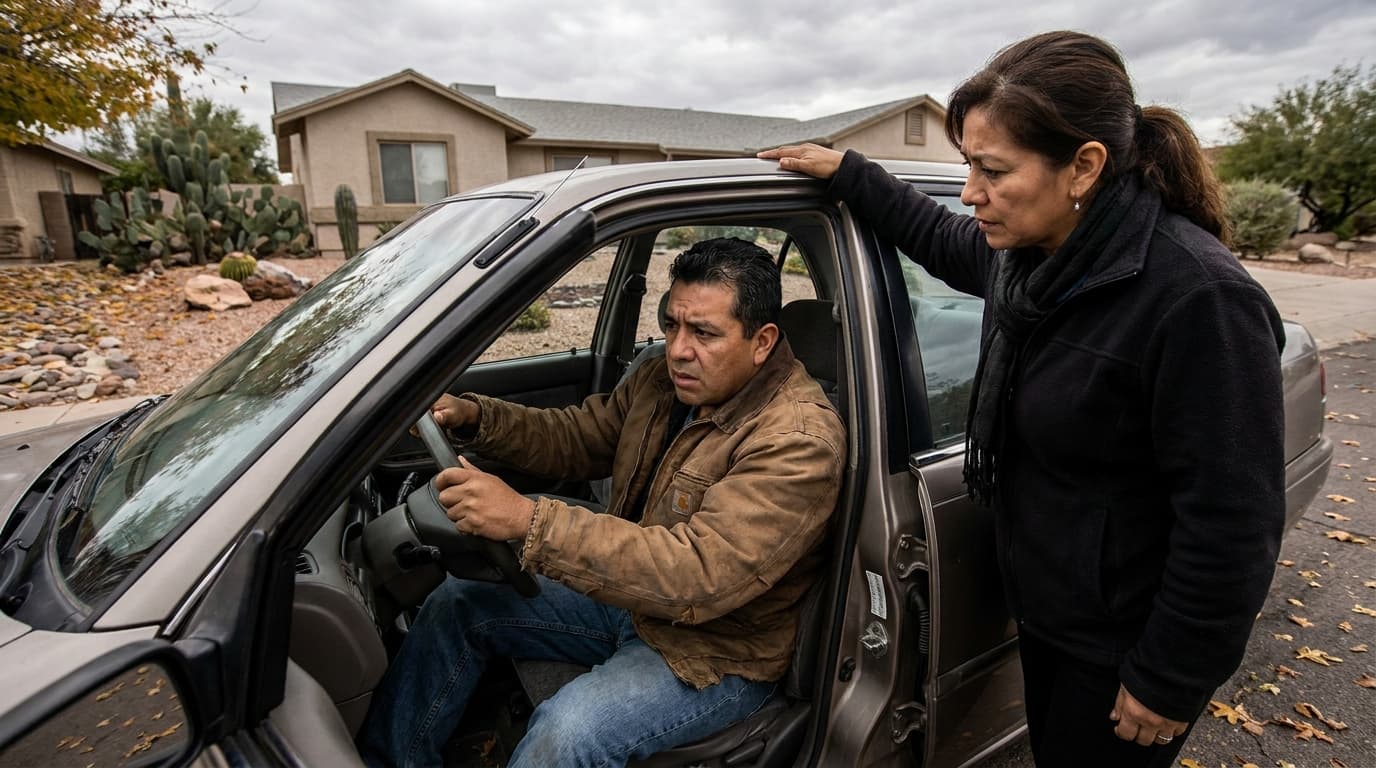
Two numbers define the financial reality for Arizona households right now: 21.19% and 11.9%. The first is the Federal Reserve's reported average credit card APR as of August 2026. The second is the average 24-month personal loan rate from the same source. For a household earning Arizona's median income of $72,581 (U.S. Census Bureau, 2022 ACS), carrying a $15,000 credit card balance at 21.19% costs roughly $265 every single month in interest alone. That's money that vanishes without reducing your balance in any meaningful way. If your credit history has made borrowing feel out of reach, bad credit loans in Arizona may represent a more direct path than you've been led to believe.
Quick Answer
What are bad credit loans in Arizona, and can you actually qualify?
Bad credit loans in Arizona are personal loans designed for borrowers whose credit scores fall below conventional bank thresholds. With credit card APRs averaging 21.19% (Federal Reserve, August 2026), consolidating or replacing high-rate debt with a fixed personal loan can meaningfully reduce monthly costs. Qualification depends on income, debt-to-income ratio, and the lender's criteria. Read on for details.
What Staying Where You Are Actually Costs
The math on minimum payments is quietly devastating. At the Federal Reserve's current reported average credit card rate of 21.19%, here is what three common balance levels cost over time if you pay only the minimum each month (assuming a minimum of 2% of the outstanding balance):
| Balance | Est. Monthly Minimum | Interest Portion (Month 1) | Years to Pay Off | Total Interest Paid |
|---|---|---|---|---|
| $10,000 | $200 | ~$177 | ~30 years | ~$13,900 |
| $20,000 | $400 | ~$353 | ~30 years | ~$27,800 |
| $30,000 | $600 | ~$530 | ~30 years | ~$41,700 |
These are not projections or estimates. They are calculated directly from the Federal Reserve's current reported average credit card rate of 21.19% as of August 1, 2026.
Personal Loan Payment Calculator
Estimate your monthly payment on a fixed-rate personal loan.
Monthly Payment
$772.19
Total Interest
$3,532
Total Cost
$18,532
What Changes When Arizona Residents Take Action
The Federal Reserve's average 24-month personal loan rate of 11.9% (August 2026) tells a very different story. A fixed-term loan with a defined end date replaces the open-ended minimum-payment treadmill. Use the personal loan calculator to model your own numbers. Here is what the same three balances look like consolidated at 11.9% over 24 months:
| Balance | Monthly Payment (24 mo.) | Total Interest Paid | Interest Saved vs. Credit Card Minimums |
|---|---|---|---|
| $10,000 | ~$471 | ~$1,300 | ~$12,600 |
| $20,000 | ~$942 | ~$2,600 | ~$25,200 |
| $30,000 | ~$1,413 | ~$3,900 | ~$37,800 |
For an Arizona household earning $72,581 annually (roughly $6,048 per month before taxes), saving even $177 per month on a $10,000 consolidation represents nearly 3% of monthly gross income returned to your actual life. That's a car payment, a utility bill, or the beginning of a holiday fund. Speaking of which, if you're thinking about how to stretch your dollars between now and the end of the year, our guide on how to make a christmas budget is worth reading before Black Friday arrives on November 27.
Prices in the West region rose 3.4% over the past 12 months (Bureau of Labor Statistics, September 2026), and gasoline is averaging $4.28 a gallon nationally (U.S. Energy Information Administration, week of October 19, 2026). Every dollar redirected from interest payments to actual expenses matters in this environment.
What the Process Actually Looks Like for Arizona Residents
- Gather your current balances and interest rates. Pull your most recent statements and note the APR on each account. Knowing the exact cost of your current debt is the foundation of any comparison worth making.
- Check your credit score range. A score of 720 or above typically qualifies for the most competitive rates. Scores between 660 and 719 qualify with moderate rates. Scores between 580 and 659 may still qualify, though rates will be higher. Knowing where you stand narrows the options worth pursuing.
- Compare consolidation and personal loan options using current market rates. The Federal Reserve's 11.9% average is a useful benchmark, but individual offers vary by lender, term, and your credit profile. Global rate uncertainty, visible in financial markets through late October 2026, reinforces why locking in a fixed rate now is a more predictable choice than remaining on variable-rate credit cards heading into the holiday season.
- Explore your options through Safe Bet Loans. They work with personal loan lenders who specialize in a range of financial situations, including those that traditional banks often decline. If your credit history has been complicated, this may be a more useful starting point than a conventional bank application.
Who Qualifies, and What to Do If You Are Not Sure Yet
Credit score is one variable, not the whole picture. Here is a practical breakdown:
- 720 and above: You likely qualify for the best available rates on personal loans. Shop multiple lenders to find the most favorable terms.
- 660 to 719: You qualify at moderate rates. The savings versus credit card debt are still real and worth calculating.
- 620 to 659: You may qualify, though rates will be higher. Run the numbers carefully to confirm the consolidation still benefits you.
- Below 620: Conventional approval is harder, but lenders who specialize in non-traditional credit profiles do exist. Alternatives include secured loans, credit-builder loans, or working with a nonprofit credit counselor before applying.
Lenders also consider your debt-to-income ratio (DTI), typically preferring borrowers whose total monthly debt payments don't exceed 40% to 45% of gross monthly income. If your DTI is high, reducing one or two smaller balances first can shift that ratio meaningfully.
If you don't qualify today, three concrete steps can change that within six to twelve months: dispute any inaccurate items on your credit report through AnnualCreditReport.com, bring all accounts current to stop negative payment history from accumulating, and reduce utilization on revolving accounts below 30% of each card's limit. These aren't abstract suggestions. They are the inputs that credit scoring models respond to most directly.
Peoria
Peoria (population 191,292, U.S. Census Bureau ACS 2022) is one of the Valley's fastest-growing communities. Residents managing household debt here face the same 21.19% average credit card rate as everyone else, but the city's growth means new expenses, from rising housing costs to longer commutes, compound the pressure of carrying high-interest balances.
Chandler
Chandler (population 275,618, U.S. Census Bureau ACS 2022) has a strong employment base in technology and manufacturing. Even so, total U.S. consumer revolving debt stands at $1.35 trillion (Federal Reserve, August 2026), a figure that reflects how broadly credit card reliance has spread across all income levels, including communities like Chandler.
Glendale
Glendale (population 248,083, U.S. Census Bureau ACS 2022) residents managing fixed costs on tighter budgets feel the West region's 3.4% price increase acutely. Reducing a monthly interest obligation by even $150 to $200 through a fixed-rate personal loan can meaningfully relieve that squeeze.
Gilbert
Gilbert (population 267,267, U.S. Census Bureau ACS 2022) has grown into one of Arizona's most affluent suburbs, but income level doesn't immunize households from credit card debt cycles. A family earning above the state median can still find themselves paying hundreds monthly in interest with no clear payoff date in sight.
Carrying a $15,000 balance at the current average credit card rate costs roughly $265 in interest every month with no fixed end date. Moving that balance to a fixed 24-month personal loan changes the equation entirely. If you want to see whether that option is available to you, Safe Bet Loans connects borrowers with lenders who work across a range of credit situations. The cost of waiting is measurable. The cost of looking is not.
Frequently Asked Questions
What are bad credit loans in Arizona?
Bad credit loans in Arizona are personal loans available to borrowers with credit scores below conventional bank thresholds, typically under 620. They are offered by lenders who specialize in non-traditional credit profiles. Rates are generally higher than the Federal Reserve's 11.9% average for standard personal loans, but lower than the 21.19% average credit card APR.
How do bad credit personal loans work?
You borrow a fixed amount and repay it in equal monthly installments over a set term, usually 12 to 60 months. Unlike credit cards, the rate and payment don't change. This predictability makes budgeting more manageable. A Personal Loan Calculator can show you estimated payments before you apply anywhere.
Who qualifies for a personal loan in Arizona with bad credit?
Qualification depends on credit score, income stability, and debt-to-income ratio. Borrowers with scores above 580 have the broadest range of options. Lenders who specialize in non-traditional credit situations, like those accessible through Safe Bet Loans, may work with applicants that conventional banks decline.
What are the pros and cons of bad credit loans?
The main advantage is access to fixed-rate credit when high-APR cards are the only current alternative. The main drawback is cost: rates for lower credit tiers exceed the Federal Reserve's 11.9% average. Weigh the fixed monthly payment against your current minimum payment and total interest to confirm the math favors borrowing.
What does a bad credit personal loan typically cost in Arizona?
Rates vary by lender and credit profile. The Federal Reserve reports the national average 24-month personal loan rate at 11.9% as of August 2026, but borrowers with scores below 620 should expect higher offers. Always compare the APR across at least two to three lenders before accepting any loan offer.